The Fathers, Pioneers & Sages
of Chinese Medicine
The development of Traditional Chinese Medicine spans more than four millennia. The figures honored here — legendary founders, pioneering physicians, groundbreaking scholars — shaped a system of healthcare focused on balance, prevention, and holistic treatment that endures to this day.
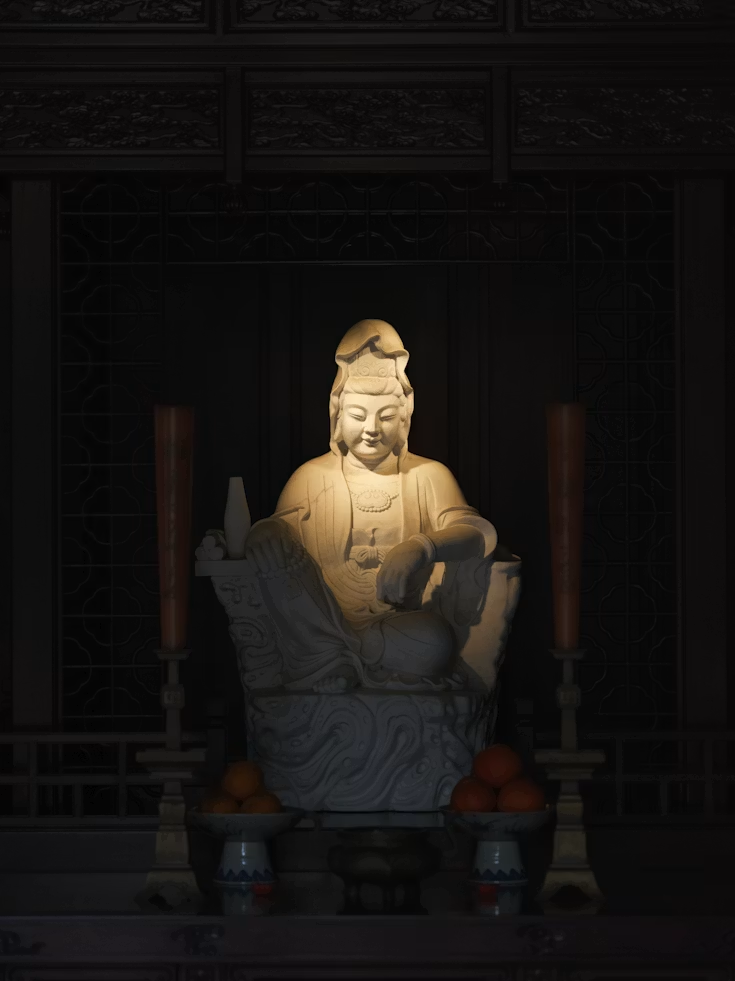 c. 2800–2600 BCE
Shennong
The Divine Farmer
Often regarded as the founder of Chinese herbal medicine, Shennong is a legendary cultural hero known as the “Divine Farmer.” According to tradition, he personally tested hundreds of plants to determine their medicinal properties, laying the foundation for Chinese pharmacology.
He is associated with the ancient herbal text Shennong Bencao Jing (Divine Farmer's Classic of Materia Medica), one of the earliest compilations of medicinal substances in China. While his existence is considered mythical rather than historical, his influence remains central to Traditional Chinese Medicine.
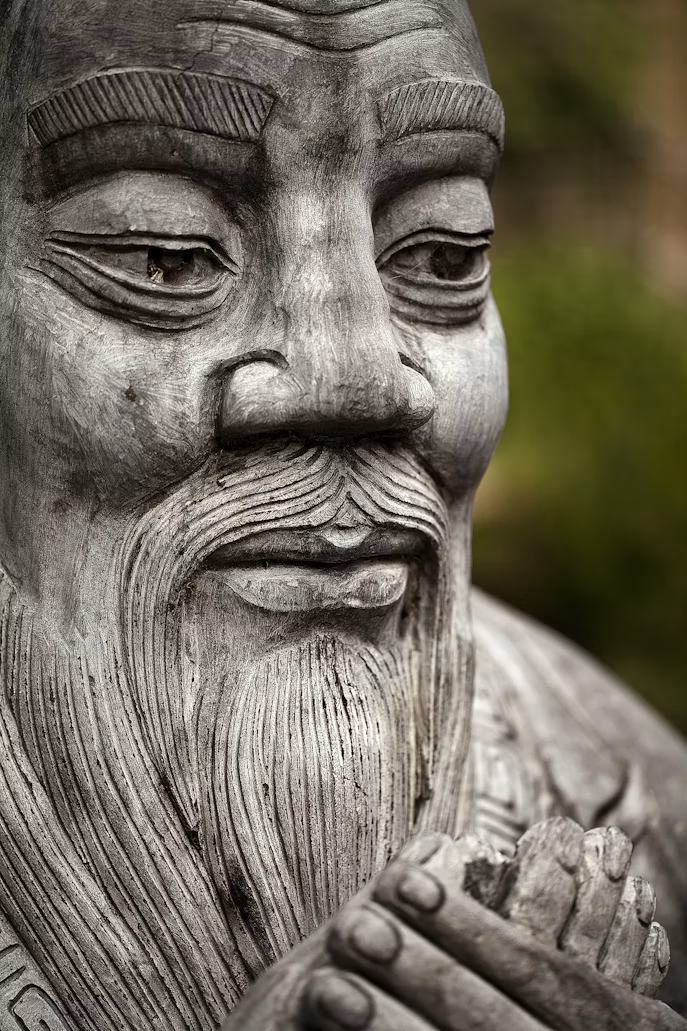 trad. c. 2697–2597 BCE
Huangdi
The Yellow Emperor
The Yellow Emperor, or Huangdi, is a legendary figure whose name is attached to one of the most important medical texts in Chinese history: the Huangdi Neijing (The Yellow Emperor's Inner Canon).
This foundational work introduced many of the core concepts of Chinese medicine, including the theories of Yin and Yang, the Five Elements, Qi (vital energy), meridians, and preventive healthcare. Although the text was compiled centuries after Huangdi's supposed lifetime, it remains one of the most influential medical works ever written.
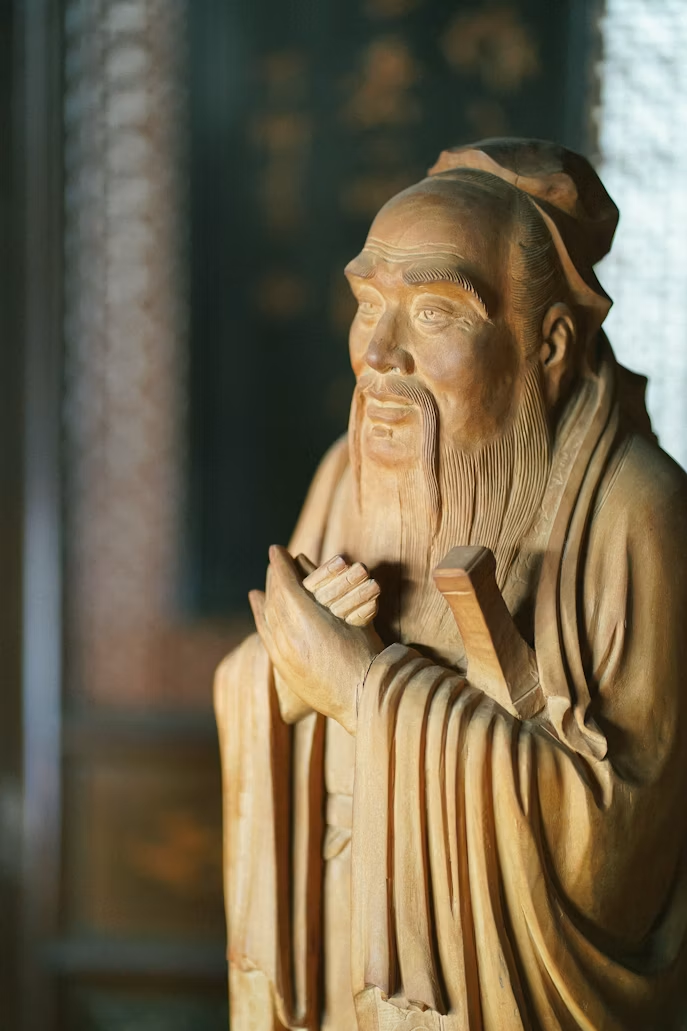 c. 407–310 BCE
Bian Que
Pioneer of Diagnosis
Bian Que is considered one of the earliest historically recognized physicians in China. He is celebrated for his exceptional diagnostic abilities, particularly pulse diagnosis, observation, and clinical examination.
Many stories describe his ability to detect illness before symptoms became severe, highlighting the importance of early intervention and prevention. His legacy helped establish diagnosis as a cornerstone of Chinese medical practice.
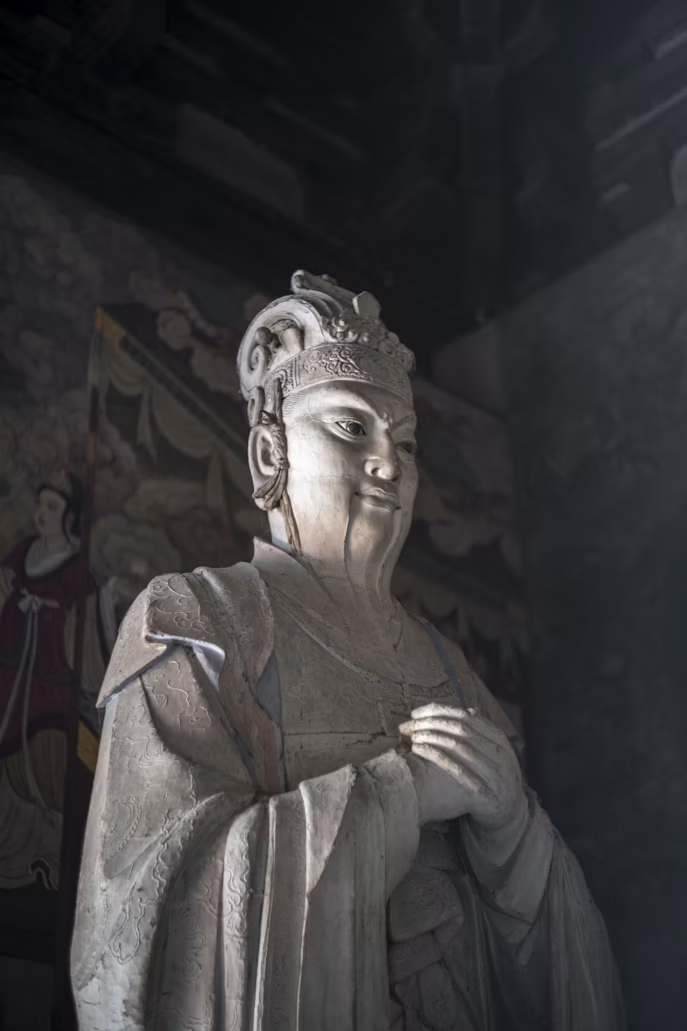 c. 150–219 CE
Zhang Zhong Jing
The Sage of Medicine
Known as the “Sage of Medicine,” Zhang Zhong Jing is widely regarded as one of the greatest physicians in Chinese history. During a period marked by epidemics and widespread disease, he developed systematic methods for diagnosing and treating illnesses.
His masterpiece, Shang Han Lun (Treatise on Cold Damage Disorders), introduced diagnostic patterns and herbal treatment principles that continue to guide practitioners of Chinese medicine today. His work is often compared to the influence of Hippocrates in Western medicine.
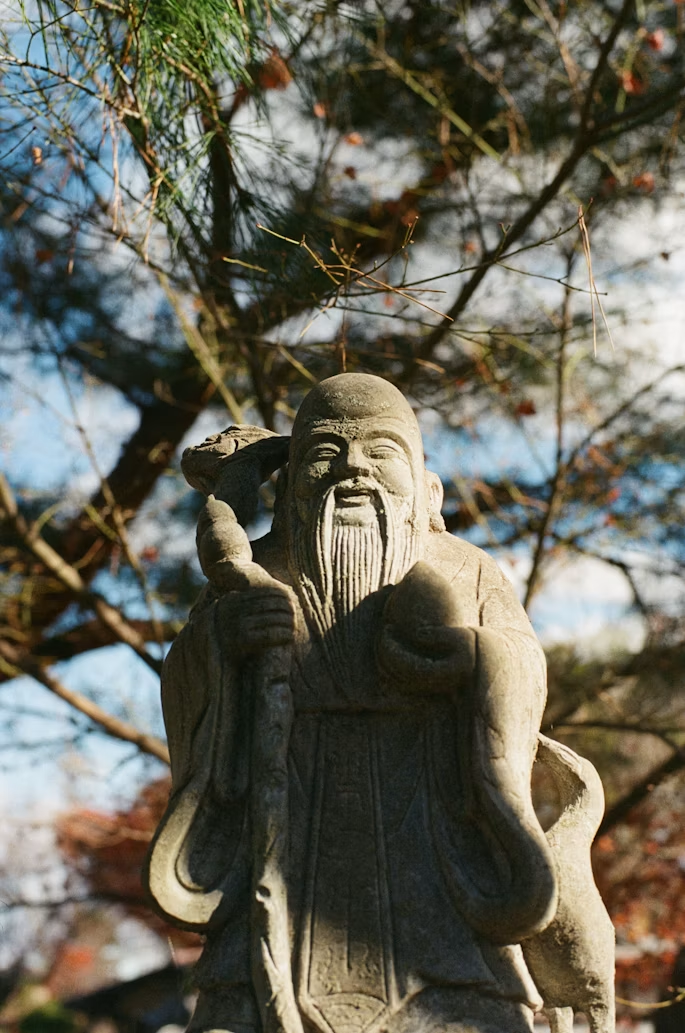 c. 140–208 CE
Hua Tuo
The Great Surgeon
Hua Tuo is remembered as China's most famous ancient surgeon. He reportedly developed a herbal anesthetic called Mafeisan, allowing him to perform complex surgical procedures centuries before modern anesthesia.
In addition to surgery, he promoted physical exercise as a means of maintaining health and created the Five Animal Frolics (Wu Qin Xi), a system of therapeutic movements inspired by the tiger, deer, bear, monkey, and crane. His innovative approach combined medicine, surgery, and preventive care.
- 581–682 CE
Sun Simiao
The King of Medicine
Revered as the “King of Medicine,” Sun Simiao made lasting contributions to both medical practice and medical ethics. His most famous works, Essential Prescriptions Worth a Thousand Gold Pieces and its Supplement, compiled extensive medical knowledge covering diagnosis, treatment, nutrition, and disease prevention.
He also emphasized compassion, professionalism, and equal treatment for all patients — principles that remain influential in healthcare ethics today.
- 1518–1593 CE
Li Shizhen
The Great Pharmacologist
Li Shizhen is considered the greatest pharmacologist in Chinese history. After nearly three decades of research, he completed the Bencao Gangmu (Compendium of Materia Medica), an encyclopedic work documenting approximately 1,900 medicinal substances and more than 11,000 prescriptions.
The text corrected numerous errors in earlier medical literature and greatly advanced the study of medicinal plants, minerals, and animal-derived remedies. His work became a landmark achievement in world medical history and was translated into multiple languages.
From Shennong's exploration of medicinal herbs to Li Shizhen's scientific cataloging of medicines, their ideas continue to guide modern practice — enduring symbols of one of the world's oldest and most sophisticated medical traditions.